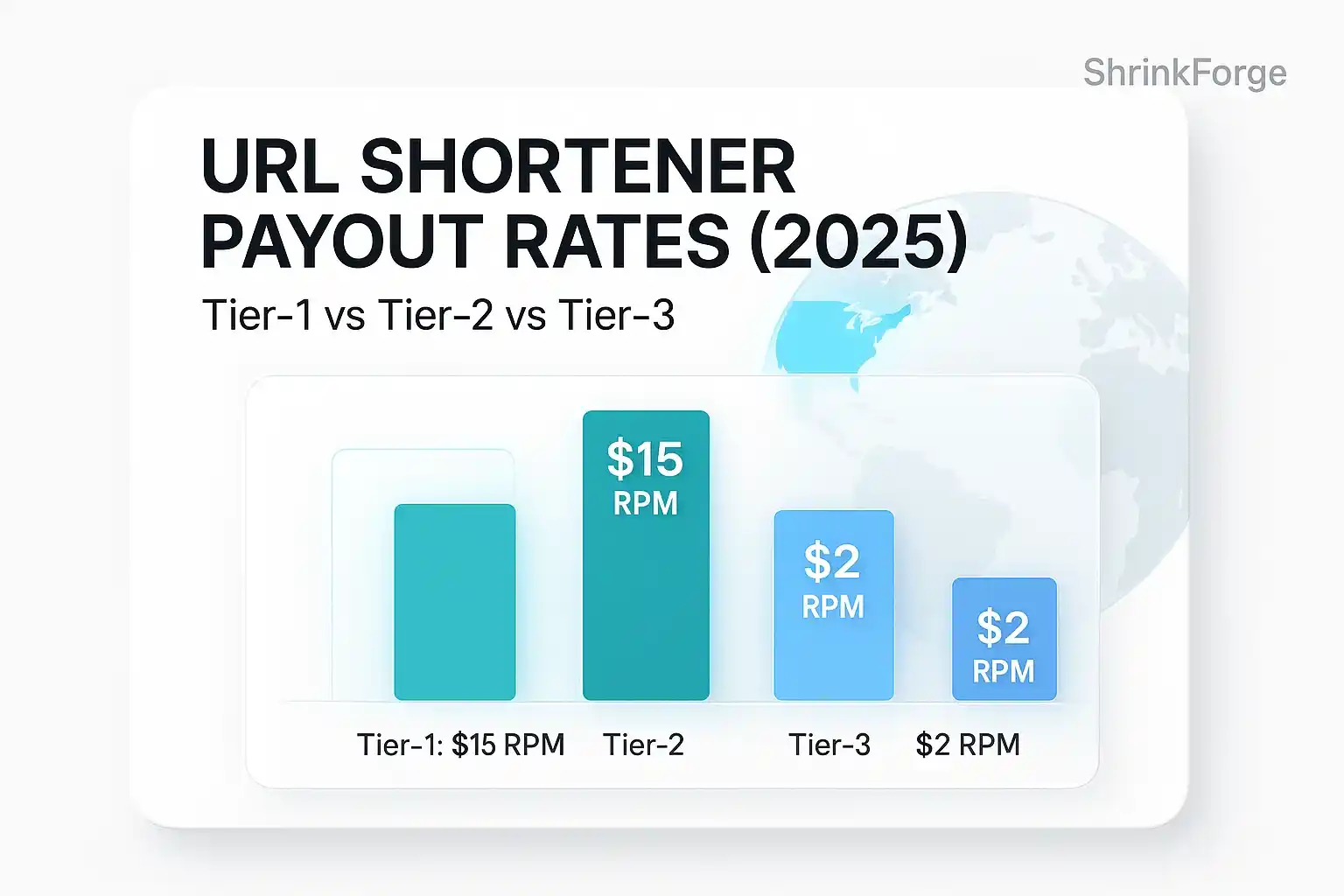
If you’re new to monetizing links, you’ll quickly notice every network talks about URL Shortener Payout rates—often quoting big numbers for “Tier-1” countries and smaller ones for the rest. But what exactly are these rates, how are they calculated, and—most importantly—how can you influence them without resorting to spammy tactics?
This guide breaks down the math behind payout tables (CPM/RPM), explains why rates vary so much by GEO, device, and traffic quality, and gives you a practical workflow to raise your URL Shortener Payout rates the clean way.
Want to see real examples? Browse live results here once you’re set up: Payment Proofs →
URL Shortener Payout Rates (2025): The No-Nonsense Guide
What “payout rates” really mean (and why the wording is confusing)
Most shorteners publish “payout rates” per 1,000 views (or per 1,000 paid views). In analytics, this is commonly expressed as RPM (revenue per mille) or CPM (cost per mille) depending on direction. While networks may use slightly different formulas, the idea is consistent: money per thousand impressions.
If you need the canonical definition, Google explains RPM = (estimated earnings ÷ impressions) × 1000—this is a neutral way to think about URL Shortener Payout rates regardless of the network’s UI wording. Google Help
Key takeaway: Payout “per 1,000” is not a promise of what you’ll always earn—it’s an average that goes up or down with the quality and eligibility of your traffic.
Why rates differ so widely (even for the same GEO)
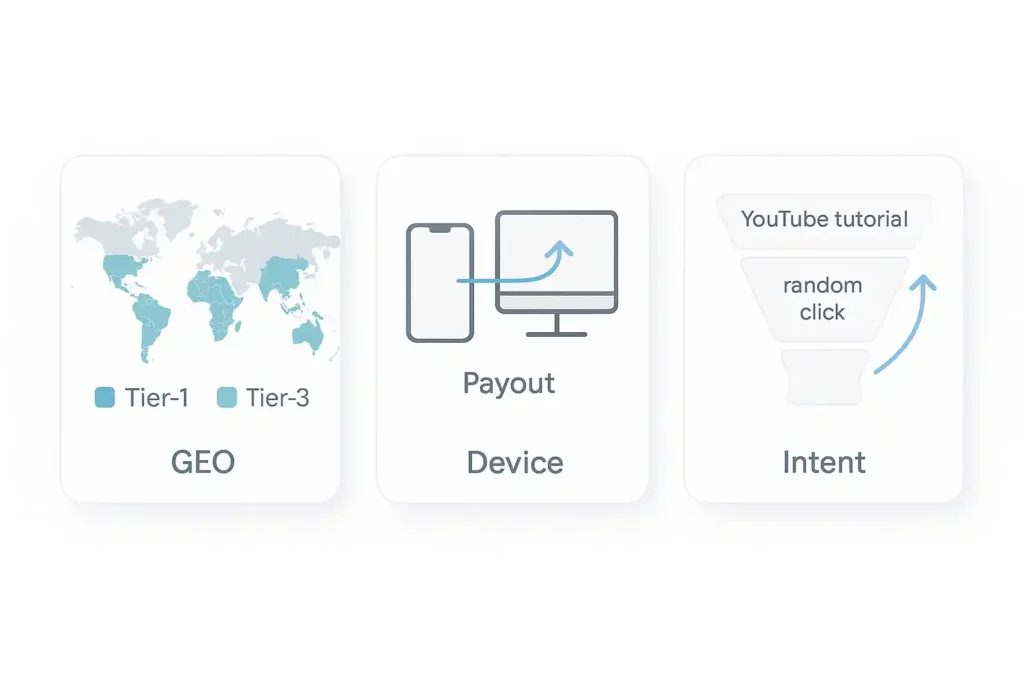
You might see one network listing $10 for US traffic and another showing $6–$25. Are some lying? Usually not. What changes the URL Shortener Payout rates is the composition of your traffic and the rules a network applies before counting a view as payable.
Here are the big levers:
- GEO & advertiser demand
Tier-1 countries (US, UK, CA, DE, AU) have more advertisers bidding for impressions. More demand → higher effective CPM/RPM. Tier-2/3 have fewer bidders and lower average bids. - Device and browser mix
Advertisers value certain environments more (for viewability and conversions). For many niches, Android Chrome and iOS Safari viewability is strong; odd or legacy browsers can depress fill and lower the effective URL Shortener Payout rates. - Traffic source & intent
Platforms with native intent (YouTube tutorials, Reddit how-tos, search queries) produce longer sessions and better engagement. Low-intent sources (random clicks, forced redirects) usually tank RPM. - Viewability & invalid-traffic filters
If an ad isn’t actually viewable or looks suspicious, it won’t count toward revenue. Networks that follow strict ad-quality standards will drop unqualified impressions, which can make URL Shortener Payout rates look lower—but the money you do see is real and reliable. - Frequency & session depth
More pages per session and longer dwell time raise your chance of a paid impression. One-and-done bounces pull your average down.
The practical math (with examples you can adapt)
Let’s say your landing receives 10,000 page views this week.
- If your effective RPM is $6, your earnings ≈ $60.
- If you improve viewability and intent to reach $12 RPM, the same traffic earns $120.
- If your views fall to 6,000 but your RPM rises to $18 (better source), you still earn $108, which can beat the original even with fewer impressions.
The point: your URL Shortener Payout rates are often more movable than your raw traffic volume—optimize quality first.
How to raise your URL Shortener Payout rates (without tricks)
Think of this as a 5-pillar system you can execute in a weekend, then refine weekly.
1) Clean placements and 1 clear CTA per page
- Keep the page fast (<2s on 4G), readable, and focused on one action.
- Avoid deceptive UX (fake buttons, misleading countdowns). These don’t just hurt trust—they lower paid view rates.
- Use large, accessible buttons with action labels (e.g., “Open the free checklist”).
2) Stable sources with real intent
- YouTube: Top-of-description + pinned comment, both written in benefit language, work best for evergreen content; Shorts can feed discovery.
- Pinterest: Fresh image variants that match the destination. Overlay text should promise an outcome (4–6 words).
- Reddit: Provide value natively; link once where allowed.
- Search: Publish mini “how-to” posts that answer a specific question and link to the resource.
Quality sources lift session depth and viewability → higher URL Shortener Payout rates.
3) GEO targeting the smart way
- Build simple country groups: Tier-1, Tier-2, Rest.
- If your shortener lets you customize routes, send Tier-1 to the cleanest, highest-value page variation (fast, no distractions), and test a lighter template for slower networks.
- Track RPM by GEO segment weekly.
4) UTM discipline (so you know what to scale)
Tag every link consistently:?utm_source={platform}&utm_medium={placement}&utm_campaign={asset}&utm_content={creative}
This lets you isolate which placement + source combos are lifting your URL Shortener Payout rates and which are dragging.
5) Eliminate non-paying views early
- If a platform’s traffic keeps failing viewability checks or hitting invalid-traffic filters, pause it.
- Look for signals: bounce >85%, time on page <10s, and RPM near zero. Don’t try to “force it”—bad sources contaminate the whole weekend’s average.
Benchmarks to aim for (realistic, not hype)
Every niche is different, but here’s a practical target map to calibrate expectations as you grow:
- New accounts, mixed GEOs: $1–$4 RPM while learning the ropes.
- Focused Tier-1 + clean sources: $6–$15 RPM is common once you fix UX and placements.
- Dialed funnels in high-value niches: $15–$30+ RPM is achievable, but expect variance by season and campaign mix.
Remember, the goal isn’t to chase a single “headline rate.” You want a repeatable system that inches your URL Shortener Payout rates upward every month.
Learn more: How to compare Desktop vs Mobile CPM
Your weekly optimization loop (copy this)
Monday: Check last 7 days by utm_source and utm_medium. Kill the bottom 10% placements by RPM.
Tuesday: Ship 2 new creatives (e.g., new Pin image + new YouTube end screen) pointing to the same fast page.
Wednesday: Improve landing speed (compress hero image, lazy-load noncritical assets).
Thursday: Publish one mini post that solves a narrow problem and links to a resource.
Friday: Review GEO split. If Tier-1 RPM > 2× global average, consider a dedicated route to a cleaner template.
Weekend: Rest or batch content—consistency beats binges.
This loop alone can move your URL Shortener Payout rates more than any single hack.
Common pitfalls that quietly lower payout rates
- Overstuffed pages: Too many widgets/pops slow the first paint; viewability drops.
- Inconsistent branding: Users bounce faster if the click feels “off” from the platform context.
- No ALT text or captions: Accessibility isn’t just ethical; it keeps engagement and dwell up—both help RPM.
- Random “viral” sources: One lucky surge from irrelevant traffic can tank your 7-day average and mask what actually works.
Trusted definitions (for your records)
If you ever need to explain to collaborators why RPM/CPM moves around, share this definition of RPM from Google’s official docs (what we use internally when evaluating URL Shortener Payout rates): Revenue per 1,000 impressions represents estimated earnings per thousand impressions and follows the formula RPM = (estimated earnings ÷ impressions) × 1000. Google Help
Starter checklist (print this)
- Page loads under 2 seconds on 4G (WebP images, deferred scripts).
- One primary CTA above the fold; no deceptive UI.
- UTMs on every placement (YouTube, Pinterest, Reddit, Search).
- Weekly GEO split review; route Tier-1 to the cleanest template.
- Publish 2 fresh creatives and 1 mini how-to every week.
- Remove any source with very low RPM + high bounce.
FAQ
What is a “good” URL Shortener Payout rate in 2025?
For mixed traffic early on, $1–$4 RPM is normal while you learn. With clean Tier-1 sources and fast pages, $6–$15 is a strong working band. Top funnels can exceed that, but expect variance.
Are higher rates always better?
Not if they’re inconsistent or come from unstable sources. A steady $10 RPM you can grow is worth more than a spike to $25 that collapses next week.
Do device and browser really matter?
Yes—advertiser demand and viewability differ by environment, which shifts effective RPM. Track by device in your analytics and test templates accordingly.
How often should I change my landing?
Iterate weekly in small steps (copy, hero, image size). Big redesigns make it hard to learn what moved your URL Shortener Payout rates.