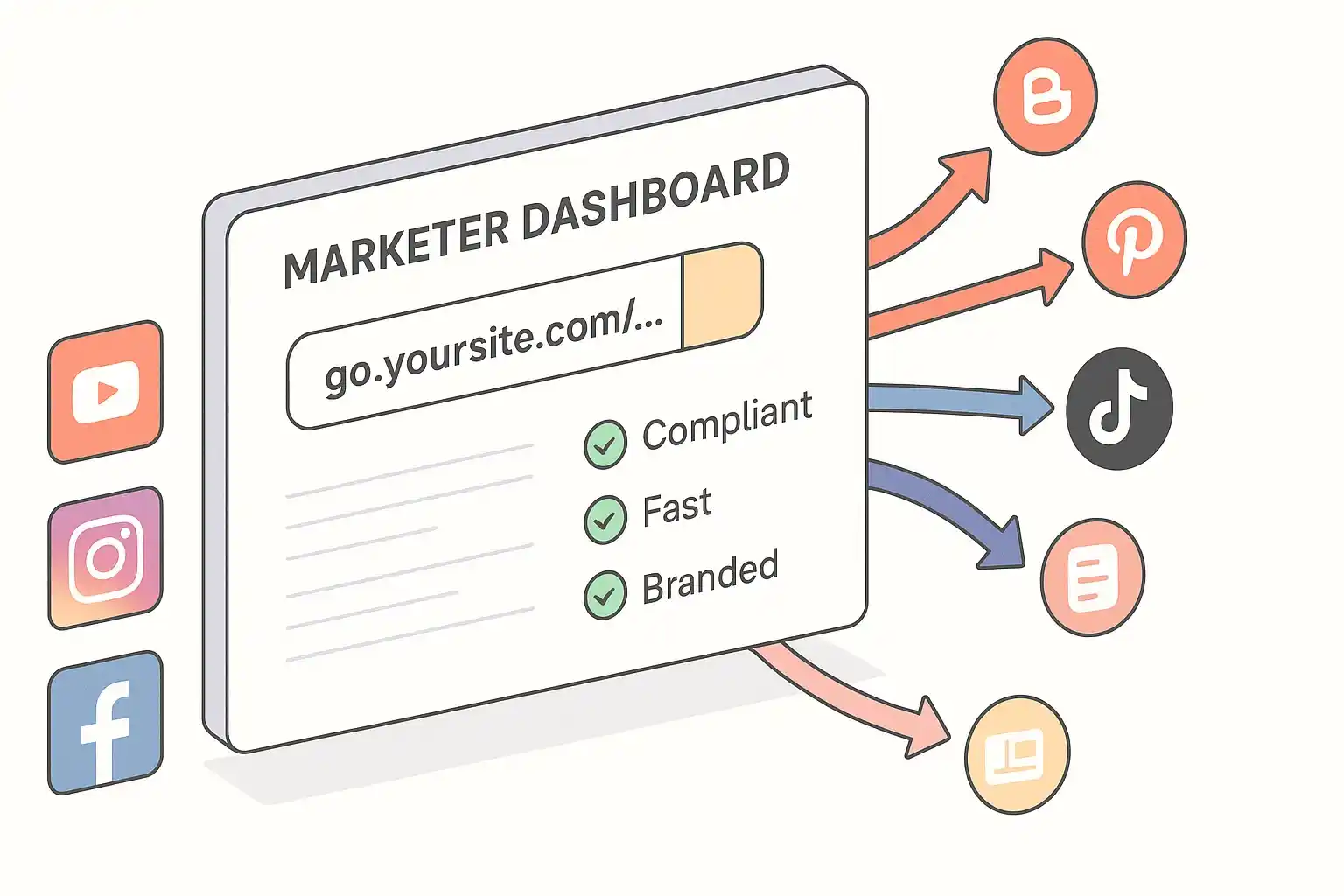
Here’s the best free traffic sources for url shortener – this guide is written for beginners who want clean, long-term traffic that platforms approve and users actually trust.
If you’re just starting out with a monetized short link (ideally on a branded domain like go.yoursite.com/...), your first wins come from free channels where attention is already flowing. Below you’ll find beginner-friendly, step-by-step playbooks for each major platform—what to post, where to place your link, what to avoid, and how to measure success—so you can build compounding, clean traffic without burning accounts or spamming.
Before you start: clean-traffic ground rules
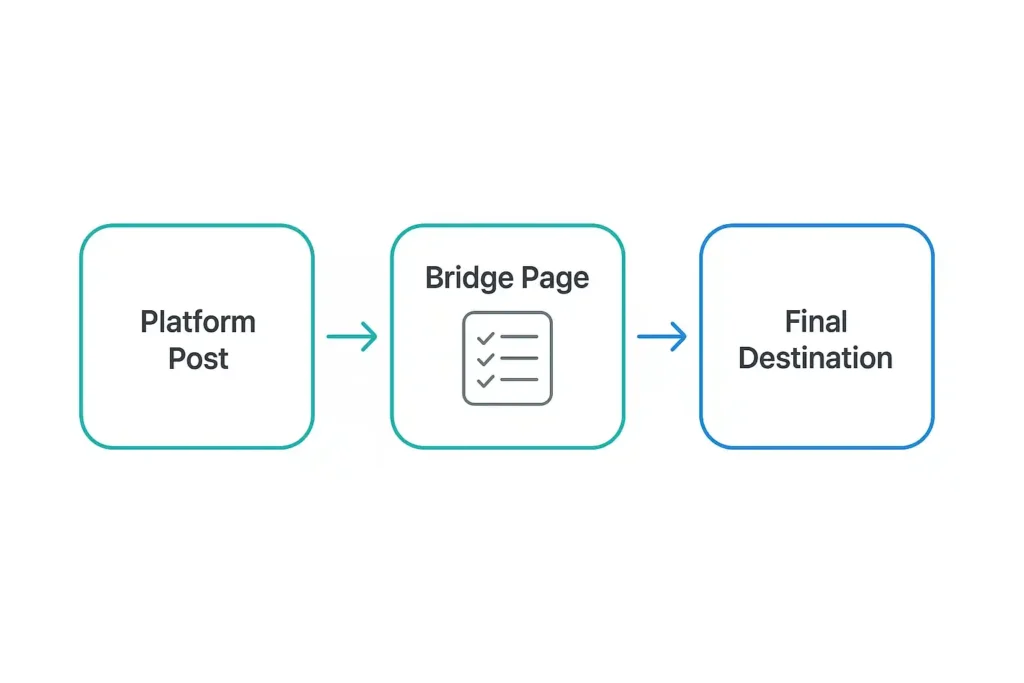
- Use a branded short domain. People (and platforms) trust
go.yoursite.com/offerAmore than a generic shortener URL. It also helps you rank for long-tail queries like best free traffic sources for url shortener on your blog. - Bridge page > raw affiliate link. When a platform restricts direct affiliate links, send users to a small, helpful page (summary, FAQs, comparison). Your short link then routes from that page to the final destination.
- One promise, one path. Match the benefit you tease (thumbnail, title, caption) with the content they land on and the link they click next.
- Keep it fast. A slow bridge page ruins intent. Aim for <1s to first interaction on mobile.
- Use UTMs. Tag links like
?utm_source=youtube&utm_medium=organic&utm_campaign=checklistso you can see what’s working. - Consistency over bursts. Posting 3–5 times per week in a repeatable rhythm beats one noisy weekend.
YouTube: the evergreen engine
YouTube is the most reliable free source for long-term, clean traffic. Viewers arrive with intent, your content keeps ranking, and links in the description and pinned comment are native and allowed.
Where your short link goes
- First two lines of the description (visible without clicking “More”).
- Pinned comment (your own comment pinned to the top).
- Optionally on-screen end cards pointing to a playlist; each video’s description then carries your link.
Beginner content that works
- How-to tutorials, comparisons (“X vs Y”), top lists (“Top 5 tools”), mini case studies.
- Titles promise a tangible outcome: “How I cut software costs by 60% (step-by-step).”
Step-by-step
- Write 3–5 talking points; record a 4–9 minute video addressing one user problem.
- Place a single bridge-page link in the top of your description; keep it the same place every time.
- Summarize the outcome in the first 10 seconds; repeat the CTA near the end.
- Add chapters (timestamps) to improve UX and retention.
Avoid
- Misleading thumbnails or stacking lots of links.
- Thin videos under 60–90 seconds with no substance (worse retention = worse reach).
Measure
- Views that convert to description clicks, average view duration, comments/likes ratio.
Facebook: trust via profile, pages, and groups
Facebook is powerful for beginners who looking for the best free traffic sources for url shortener, because you can seed traffic without ads—if you play by the rules and lead with value.
Where your short link goes
- Personal profile: “Featured” link, “Intro,” and at the end of value posts.
- Page: “About” section and occasional posts (mix text + image or short video).
- Groups: only where rules allow links; otherwise post value in the main text and place your link in the first comment if permitted.
Beginner content that works
- Story posts (“How I saved $X on Y this month”), checklists, quick carousels with tips, short reels.
- Mini guides that solve a real problem in 5 bullets.
Step-by-step
- Join 3–5 niche groups; observe the culture for a week.
- Answer questions without links first; build a reputation.
- Post your first mini-guide (200–300 words). If links are allowed, place one clean bridge-page link at the end; if not, use a comment or your profile Featured link.
Avoid
- Dropping a link on day one, mass-tagging users, or pasting affiliate URLs directly.
- Posting identical content to multiple groups on the same day.
Measure
- Post reach, comments, saves/shares, profile visits → link clicks.
Instagram: bio-link and stories that compound
Instagram is a discovery and conversion nudge channel. You earn attention with short Reels and funnel clicks through your bio and story link stickers.
Where your short link goes
- Bio link (your branded short link or a one-screen landing that routes via your short link).
- Story “Link” sticker (most accounts now have it).
- Highlights for evergreen access (e.g., “Checklists,” “Deals,” “Tools”).
Beginner content that works
- Reels (7–12s) with a strong hook in the first second.
- On-screen caption that names the outcome (+ subtle “link in bio”).
Step-by-step
- Create 5–6 highlights (Guides, Tools, Checklists, Results, FAQs, Freebies).
- Post 1–2 Reels per day for a week; every third Reel gently mentions “Full guide in bio.”
- Use descriptive alt text and a readable thumbnail frame.
Avoid
- Placing raw affiliate links in captions (often suppressed).
- Relying only on hashtags; prioritize shareability and saves.
Measure
- Profile visits → bio-click rate, story link taps, saves per Reel.
Read more: How to Increase CPM on URL Shorteners (2025): 17 Proven Tactics for Higher Earnings
TikTok: fast discovery, clean routing
TikTok’s reach is unmatched for beginners. Treat it as attention capture → send to your Instagram bio or YouTube description where the link sits naturally, then route through your short link.
Where your short link goes
- Bio link (often unlocked on business accounts).
- If bio link not available: verbal CTA to your IG/YouTube where the link lives.
Beginner content that works
- “Problem → fix” demos, over-the-shoulder tips, split-screen reactions to relevant news or tools.
Step-by-step
- Post 2–3 short videos daily around a single theme for 7–10 days. Consistency trains the algorithm.
- Use a spoken CTA: “Full checklist via my IG bio / detailed guide on my YouTube.”
- Once bio links open up, send directly to your bridge page (fast, simple, compliant) and route with your branded short link.
Avoid
- Comment spamming with links or DM blasts.
- Off-topic trends that bring the wrong audience.
Measure
- Watch time, profile visits, bio-link availability, eventual clicks.
Pinterest: the evergreen “save now, click later” channel
Pinterest users save resources to return later—perfect for checklists and guides. It is the sleeper channel for the best free traffic sources for url shortener strategy because every Pin can link to a destination.
Where your short link goes
- Each standard Pin can point to your bridge page (use branded short link or the bridge URL that then uses your short link internally).
- Board descriptions and titles should match user intent.
Beginner content that works
- Vertical pins (1000×1500), clean text overlay, one benefit in big type.
- Idea Pins for multi-step how-tos, then publish standard linkable pins to drive clicks.
Step-by-step
- Create 5–7 boards (Guides, Checklists, Tools, Deals, Tutorials, Case Studies, “Start Here”).
- For each blog post, design 3–5 pin variations with different headlines and images pointing to the same bridge page.
- Pin daily; repurpose winners across boards over weeks so traffic compounds.
Avoid
- Reusing the same image + caption repeatedly (Pinterest suppresses duplicates).
- Low-quality images, heavy watermarks, or click-bait overlays.
Measure
- Saves, outbound clicks, CTR per pin design, top boards by clicks.
Reddit: credibility first, link later
Reddit can drive laser-targeted traffic when you respect subreddit rules and lead with full value.
Where your short link goes
- Only in subs that allow links. If not allowed, place the link on your profile or at the end with transparent context (“Full guide with sources…”).
Beginner content that works
- Deep answers, mini case studies, resource lists with explanations. Assume readers are skeptical and knowledgeable.
Step-by-step
- Spend a week reading and upvoting; take notes on what earns trust.
- Post complete, useful content inside Reddit. If permitted, add one clean link at the end that points to your bridge page.
- Engage with comments thoughtfully; don’t argue, clarify.
Avoid
- Cross-posting the same promo to five subs, low-effort “DM me” replies, or link-only posts.
- Using URL shorteners to hide destinations from mods (instant ban risk).
Measure
- Upvotes/comments, mod approvals, sustained referral traffic.
Quora: long-tail search that keeps giving
Quora answers rank in Google for years. Treat each answer as a mini blog post.
Where your short link goes
- In the answer body sparingly, or in your profile’s “About Me” with a single evergreen link.
Beginner content that works
- 200–400 word practical answers, bullet points, one small screenshot if relevant.
Step-by-step
- Pick 10 questions tightly related to your niche; write unique, genuinely helpful answers.
- Close with a light reference to your longer article or checklist on your bridge page (when appropriate).
- Update your best answers quarterly—freshness bumps visibility.
Avoid
- Copy-pasting the same answer with a link across dozens of questions.
- Over-linking inside a single answer.
Measure
- Answer views, upvotes, click-through rate to your site, time on page.
Other useful best free traffic sources for URL shortener: How to Shorten URLs and Earn Money with ShrinkForge (Beginner’s Guide 2025)
Medium & Blogger: repurpose and rank
Publishing on Medium and Blogger expands your surface area for discovery and gives you reputable pages to share on social.
Where your short link goes
- Within the article (contextual), at the end under a short “Resources” section, and in your author bio.
Beginner content that works
- 1,000–1,800 word “how-to”s, lists, and comparisons. If you also post on your own blog, use
rel="canonical"where supported.
Step-by-step
- Repurpose your core blog guide into a Medium article with fresh examples.
- Submit to a relevant Medium publication for reach.
- Embed a single, clear link to your bridge page (not a wall of links).
Avoid
- Thin posts with three paragraphs and three links (looks spammy).
- Publishing identical content without canonical (duplicate content confusion).
Measure
- Reads vs. views, referral clicks to your domain, email signups.
Twitter/X & LinkedIn: distribute ideas, earn profile clicks
Short insights and mini case studies can drive profile visits and first-reply link clicks.
Where your short link goes
- A single link in the first comment/reply or at the end of a concise post on LinkedIn.
- Your profile website field (branded short link or bridge page).
Beginner content that works
- Short threads (X) or carousels (LinkedIn) with a clear, useful takeaway. No fluff.
Step-by-step
- Post once or twice a week: one “tips” piece, one mini case study.
- Keep the link usage light—value first, then suggest the deeper guide.
- Pin your best post to your profile and include your bridge link there.
Avoid
- Posting five link posts per day; you’ll throttle reach quickly.
- Vague motivational content with no actionable substance.
Measure
- Profile clicks, link CTR from the first reply, saves/shares.
Telegram & Discord: build a small, active core
Communities convert because they trust you. Start small and keep quality high.
Where your short link goes
- Pinned message and a dedicated “Resources” or “Start Here” channel with your bridge page.
Beginner content that works
- Weekly curated lists, short Loom walkthroughs, “tool of the week” breakdown.
Step-by-step
- Launch one clean channel. Publish house rules to prevent spam.
- Post 1–2 high-value drops per day; pin the best.
- Archive top resources in a single Google Doc linked from the channel description.
Avoid
- Forwarding random promos or flooding with 20 links per day.
- Letting users post unmoderated affiliate links (it dilutes trust).
Measure
- Active members, retention, CTR on pinned resources.
SEO Blog: the foundation that compounds
A steady stream of search visitors is the most sustainable “free” traffic of all. It also supports your primary keyword – best free traffic sources for url shortener – by giving you long-form, authoritative content to rank.
Where your short link goes
- Contextual links inside posts, a sidebar “Start Here” box, and comparison tables.
Beginner content that works
- Step-by-step guides, “Best X for Y” comparisons, and seasonal roundups (e.g., “Back-to-school deals guide”).
Step-by-step
- Publish one long, original guide weekly (1,500–2,500 words).
- Internal-link between related posts; add a single, clear CTA to your bridge page or checklist.
- Refresh winners every 60–90 days with new data or screenshots.
Avoid
- Copying vendor pages, thin affiliate roundups, or generic AI lists with no experience.
- Slow pages; fix Core Web Vitals.
Measure
- Organic clicks, time on page, email signups, returning visitors.
Forums & Q&A beyond the big platforms
Niche forums (StackExchange variants, specialized communities) are superb for intent. The rules: answer first, link later, and only when helpful.
Where your short link goes
- In your profile or sparingly in answers when explicitly allowed and context demands it.
Beginner content that works
- Specific tutorials, code/config snippets, screenshots, and solution trees (if X then Y).
Step-by-step
- Create a profile with a single evergreen link to your bridge page.
- Solve problems in full; add a resource link only if it genuinely completes the solution.
- Build reputation; moderators respect consistent helpers.
Avoid
- Signature spamming or dropping the same resource everywhere.
- Low-effort “me too” replies that add a link.
Measure
- Accepted answers, profile visits, sustained referral traffic.
Email (yes, still free and compounding)
Even if you start with zero subscribers, you can begin today by offering your free checklist and capturing emails from all the channels above.
Where your short link goes
- Your funnel should route visitors from platform → bridge page → email form → thank-you page with your resource (which can include your short link to the main offer).
Beginner content that works
- Weekly digest: one problem, one fix, one resource. People will actually read it if it’s short and consistent.
Step-by-step
- Add an opt-in box to your blog posts and bridge pages (clear promise, 1–2 fields).
- Send one useful email per week; link to your newest guide or tool.
- Keep deliverability clean (no spammy subjects, authenticate your domain).
Avoid
- Buying lists or adding people without consent.
- Over-emailing with pure promos.
Measure
- Open rate, click rate, replies, unsubscribes (aim low), and conversions.
Putting it all together (beginner roadmap)
- Choose 3 channels to start (e.g., YouTube, Pinterest, Instagram).
- Publish one flagship guide on your blog targeting best free traffic sources for url shortener, with a clean, fast bridge page and an email opt-in for your free checklist.
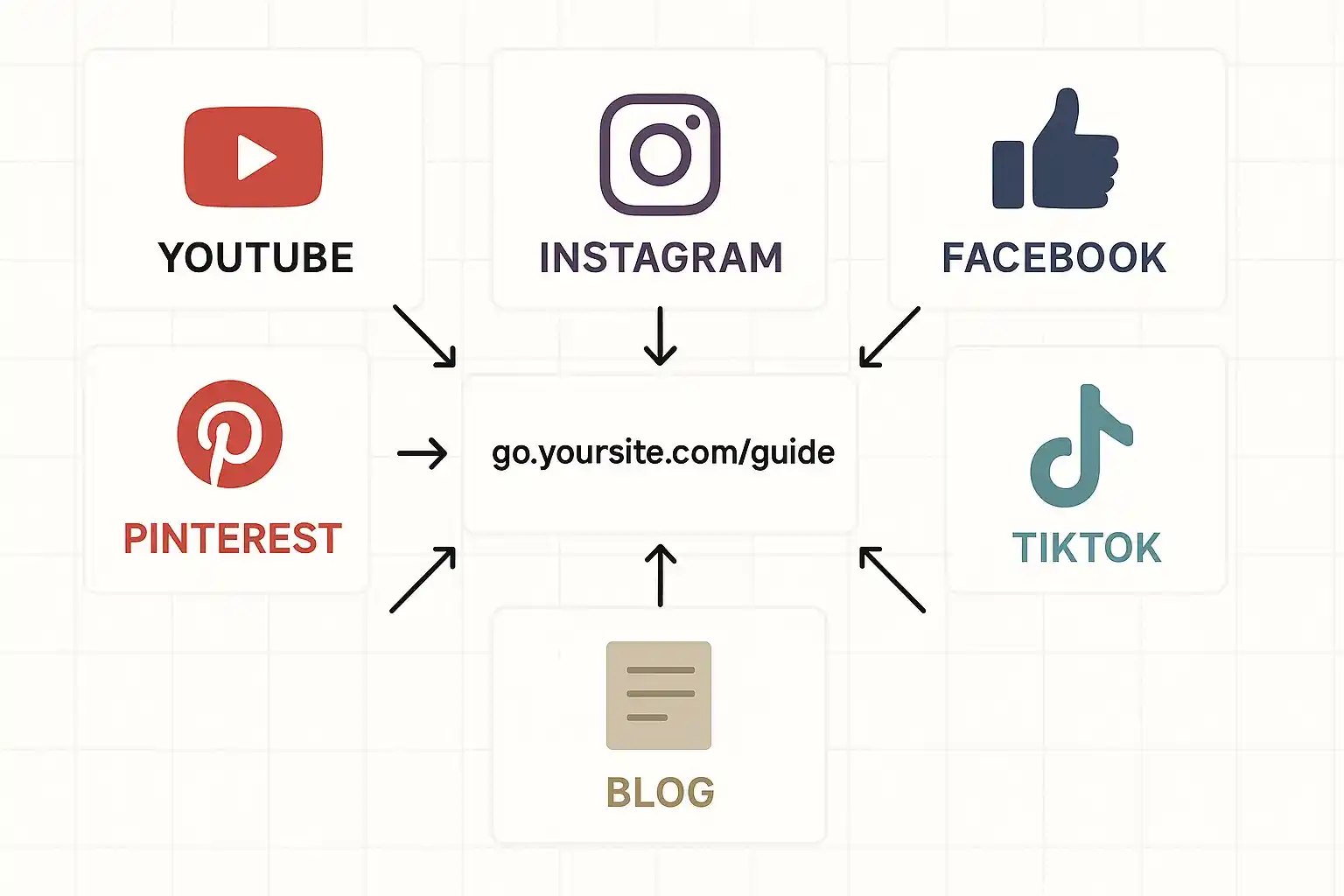
- Create native posts on each channel that solve a small part of the guide and naturally send users to the bridge page (branded short link).
- Track UTMs and watch time on page and conversion—not just clicks.
- Iterate weekly: double down on the source with the best dwell time and conversions; keep the others simmering.
Read More: URL Shortener Tracking 101 — UTMs & Analytics (Easy)
Final notes on staying clean (and approved)
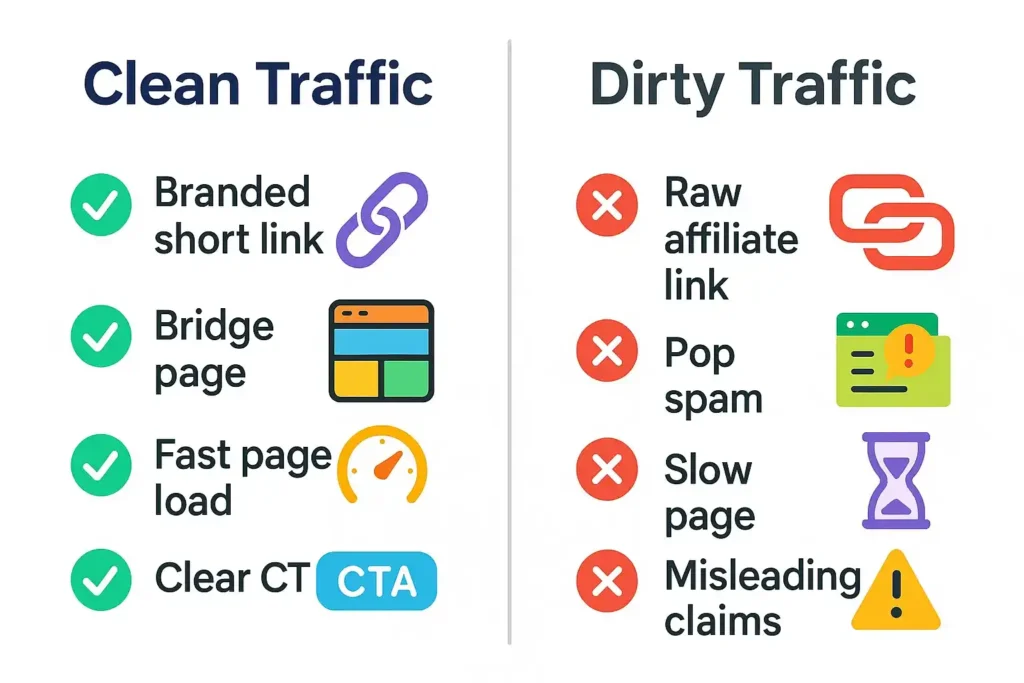
- One primary CTA everywhere. No link walls.
- Transparent value. Make your bridge page helpful enough that users would bookmark it.
- Respect platform rules. Nothing kills momentum like a banned account.
- Speed = trust. If your page feels instant on 4G, you’ll keep more clicks.
- Document everything. What you posted, where, when, and the URL used—so scaling is just repeating what works.
You can use this playbook as your operating system. It’s beginner friendly by design, but it scales: each channel can compound into thousands of monthly clean visits/clicks routed through your branded short links—without shortcuts that burn your brand or your accounts.